
“I guess I feel that we should remember the deep emotions that prompt the urge to marry the next time we hear that marriage needs to be defended against people who want to participate in it. The last thing any marriage needs to be defended against is love. We don’t have to protect society from love. It’s not like we’re talking about some really destructive emotion. It’s not like we’re talking about hate.”
I wrote and published those words as part of an opinion piece in favour of same-sex marriage in my hometown newspaper in September 2003. I was its 32-year-old editor at the time, raising a young family in that town.
Ontario had just become the first province in the country to legalize same-sex marriage a few months earlier, in June, but it would be nearly two more years before it became legal in all of Canada.
After the column appeared, the response was swift and overwhelmingly negative. Letters poured in for a few weeks after. People stopped me in the street about it. It was an unpopular opinion, to say the least. I recall one of those conversations happening in front of the town’s post office. And I recall that one of the only letters in agreement was written by the local United Church pastor at the time.
I didn’t write that piece because I believed that newspapers, even small ones, have a responsibility to uphold the values of truth, accountability, democracy, and courage. Though I do believe that. I didn’t write it because I secretly thought that, one day, I might be married to a woman myself. I had no idea what God had planned for me then.
I wrote it for a much simpler reason: I just wanted to say what always seemed so obvious to me. That love is love. And that if marriage, at its core, is a celebration of love – then surely love is the last thing marriage needs to be defended against.
Tomorrow, November 7, 2025, the U.S. Supreme Court will privately consider whether to hear a case that could challenge the 2015 decision legalizing same-sex marriage in that country. If the Court agrees to hear it, the legal foundation of marriage equality in the U.S. could be reopened. It will take the votes of just four of the nine justices. Four.
It’s a sobering reminder that history may not always move forward. That rights can be revisited, reinterpreted – even revoked. In this country too, progress will hinge on the character and choices of those in power.
In an unexpected turn of events, in a few Sundays, Charlene and I will return to that small community to participate in a discussion hosted by a local church. The event, intended to explore different kinds of marriage, is part of their ongoing dialogue around becoming an “affirming” congregation – a term many churches use to describe the process of becoming openly welcoming and supportive of 2SLGBTQ+ individuals in all aspects of church life.
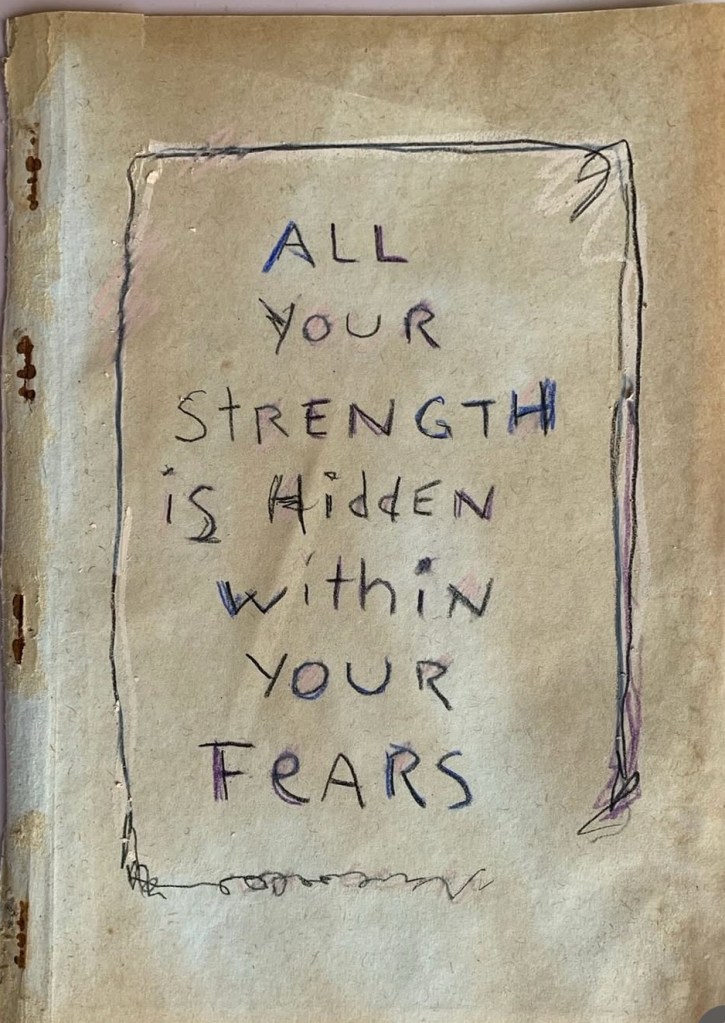
The invitation arrived while we were on vacation out east this summer. With long stretches in the car, we had time to sit with it — and with everything it stirred in us: old wounds, unresolved questions, frustrations, hesitation, anger, sadness. It was an unexpected reckoning with what that small town — and church in general — have meant to each of us.
Somewhere beneath all that turbulence though, something else began to surface: a deeper sense of responsibility. As we rolled alongside the river in New Brunswick — and the conversation carried us through a roller coaster of memory, emotion, and meaning — we circled around whether to say yes. At first, it was a firm no. But the depth of our reaction made us pause. Maybe what felt like discomfort was actually a kind of calling.
For as long as we talked about it not being our job to normalize our marriage for anyone, we also wrestled with what it would mean to stay silent. We talked about the exhaustion of explaining ourselves, again. About the risk of being tokenized. About what it would feel like to discuss the normalcy of our marriage in a space that, by now, should already know better.
And we revisited the same feeling that haunted us when we made the decision in 2020 to leave that community — the feeling that if everyone like us leaves, nothing will ever change.
Not being raised in the church, I also carry a set of more obvious questions. Like why there needs to be a process to become “affirming” when Jesus himself was radically affirming. Why love still feels conditional in places built to reflect unconditional grace. Why the church, of all places, continues to lag behind the very gospel it preaches.
But, in the middle of all that — the weariness, the questions, the justified anger — we began to wonder if maybe this was exactly the kind of moment we weren’t meant to walk away from. Maybe it was time to stop waiting for the church to catch up and to start showing up in the places where change is still possible.
After all, if this life and this marriage has taught us anything, it’s that God is not only found in clarity and comfort, but also in the mess. In the tension. In the unfinished conversations. And maybe that’s where we’re being called to show up now, too.
Going back there to share this story is an act of faith.
Faith that someone there might need this more than we can imagine. Faith that this moment is ours to pick up the torch carried by so many – like us – who have turned up in churches long before us. Faith in their questions, their courage, their persistence. Faith that their journey – unfinished and imperfect – cleared a path for ours. Faith that stories, especially the ones that challenge and stretch us, can shape a more honest future. Faith in possibility. In the idea that simply showing up might shift the ground just enough for something new to grow.
I hope there is a day — one we’ll live to see — when our marriage, and others like it, are seen as sacred like any other, no longer subject to the shifting winds of political platforms or theological gatekeeping. But, that day isn’t here yet.
Today, these marriages still carry qualifiers. They are debated, dissected, and sometimes still treated as a symbol rather than a relationship. We don’t get to take for granted that our love will be recognized, celebrated, or even respected in every room we enter. We navigate conversations others never have to think about. Over and over again. We carry stories that don’t fit neatly into church bulletins or political talking points.
Maybe there won’t be a day when it’s fully normalized, when it simply exists without explanation. But until it is, we can only live this one beautiful and messy life – and this marriage – as fully and faithfully as we can.
Believing that if God is anywhere, surely God is here. In the persistence. In the grace and tenderness of this life. In the truth of a love that refuses to be erased.


 MEANINGMAKER
Leave a reply to gloria fern (kropf nafziger) Cancel reply