
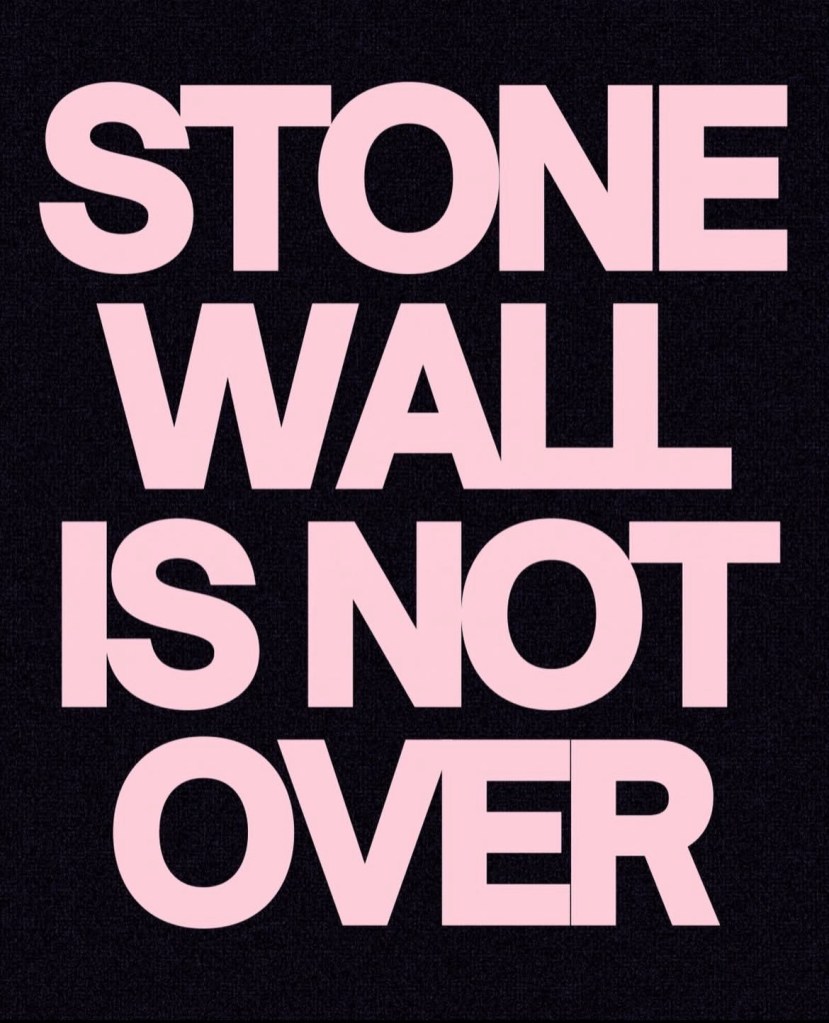
They took down the Pride flag
at Stonewall,
the birthplace of belonging,
as if lowering a cloth
could lower a people.
As if a history that rose
from riot and refusal
could be dimmed,
could be drowned,
could be undone,
by stripping its colours from the sky.
She watched as it came down
and whispered:
How do you unraise history?
You don’t, he said.
You can’t lower a legacy
raised in revolution,
by those who planted their feet
in the street
not knowing
others would have to rise, again and again,
on the scaffolding of their courage.
Fifty-seven years on,
Stonewall stands again
as a testament to what happens
when wall meets will,
when the thing meant to stop you
instead reveals who you are,
when the barrier before you
becomes smaller
than the fire within you.
Erasure is always personal.
No matter how small it starts,
its aim is vast:
it is the intimate violence
of pretending
we do not know
what we have already seen.
But the trouble with erasure
is that the erased
remember their history
with a fire no hand can smother;
the more you try
to erase a thing,
the more brightly it insists
on existing.
It has always been
a lesson in physics.
Push hard enough
on a people
and they become a force.


 MEANINGMAKER
Leave a comment