
Back when I was a kid, I looked at the world like a still life painting. Pretty and static and sort of hopelessly boring.
Nothing much ever happened in our town. But when something did happen — a car accident, the divorce of your best friend’s parents, the family dog dying of epilepsy — if you were lucky, there were people around you who tried to insulate you from it all. People who tried to reassure you that they themselves weren’t going anywhere, at least not for a long time.
As a result, you couldn’t help but feel surprised when things eventually did start disappearing without warning — your best friend moved away, the video store in town closed, the woman who was your second mother, from the time you were born until you went to school, got cancer and died within a few months. Those things instilled in you a looming sense of the other shoe about to drop and drew you closer to the people who were still alive. You paid more attention to the little things because something in you suddenly knew that summer wasn’t going to last forever.
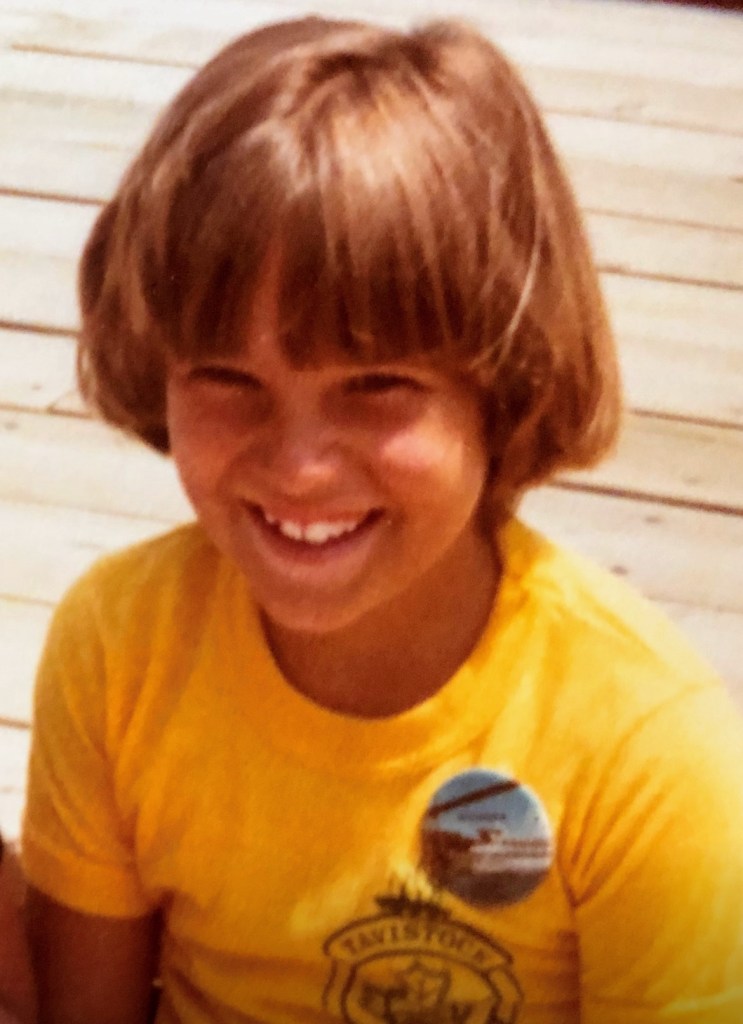
I was almost 11 that September when the woman I thought of as my second mother died. I didn’t know anything about cancer then. I just knew that she was sick and she wasn’t getting better. My mother would talk to her on the phone in hushed tones when I came into the room.
In late August, as she was nearing the end, my parents took me to see her. I sat in stunned silence looking at the frail woman lying on the couch in the sweltering end of summer heat. This robust Mennonite woman that I had spent countless hours with baking, playing in the vegetable garden, and drawing on the chalkboard in the basement — as she tortured clothes, letting her old wringer washer press the water out of them. She had filled me up with noodle soup and coffee cake and Bible stories. And, in an unfathomable turn of events, I was seeing the life drain out of her.
In that moment, I started to understand that the video store, our epileptic puppy, the marriage of my friend’s parents, and this woman who had raised me for the first four years of my life shared a certain kinship. They were united — in their impermanence. But, that she could fade into obscurity so quickly — like a whole ancient city or a once vibrant language — never to be seen again, just utterly confused my 11-year-old self. The other shoe had dropped. She couldn’t stay. No one can, I thought.
I stood next to her casket a couple of weeks later — holding my breath, and spending a lot of time looking at my shoes, to keep myself from crying. I remember willing myself not to shed a tear until I got home to my own bedroom — where I finally cried into my hot pink carpet. I didn’t know why I did that. I was 11. But it’s a core memory. I wish it were the first of its kind, but there are others just like it. The fact is that I was loved there in that Mennonite home, and I was also a little girl who just wanted to go home to her own mother.
I was there because it was the 70s and both of my parents worked. All four of us kids spent the weeks of the most formative four years of our lives there, coming home only on weekends, until we went off to school. As the youngest, I was the last one to go— an only child of sorts. It was supposed to be easier on everyone. My dad was away for work every week, leaving my mother — who didn’t have a driver’s license — to fend for herself with four kids in a small town, while working full-time in a nearby city. I’ve often said that my dad worked hard in those days— but my mother worked miracles.
I don’t know why I told this story really. I’ve never told it before. But I’ve been thinking about Mother’s Day a lot, and how it is that we mothers all want to do the best for our kids. And how it is that most of us feel that we’ve messed up on our one mission — in ways great and small.
As a little girl, my mother was the person who made me feel safest in the world. And, she was the person I started hiding my tears for — because even a little girl could see that she had enough on her plate. She wanted the very best for us. And I know that she believed that’s what she was giving us. It’s only in these last years that I see that we each also paid a price for being away from home in those early years. It came in the form of high emotional walls that have trailed us for a lifetime.
But which of us hasn’t made mistakes in raising our children? Who amongst us couldn’t use a little forgiveness?
One of the hardest realizations in life, and maybe one of the most liberating, is that our mothers aren’t saints, or saviours. They’re scapegoats who never get off as easy in the world’s eyes as fathers so often do. They’re just people who, however messy or painful our childhood might have been, and however complicated our adult relationship with them, have loved us the best they know how with the cards they were dealt and the tools they were given. I’m coming to believe that it might be a whole life’s work to accept this elemental fact — with love.
And I’ve also come to see that part of being a daughter is growing up to find out about your mother’s own hidden traumas. Her own emotional walls. You realize that she never told you about half of the horrible things she went through in life. I sometimes wish I could meet my mother in another universe, when she is a child. I’d like to take her for a walk and hear about all the things she loves about the world. I’d love to see her without a single worry. I wish I could meet that version of her — wide-eyed and full of joy. Before the world broke her heart.
I hope she knows that her motherhood may have started with her, but it continues on after her. In her traditions. In her quirky, sometimes imperfect ways. In the patterns I’ve inherited and the cycles I’m trying to break. In her love. She’s shown me that your motherhood outlives you and you do actually live inside your children forever. Because of her I know that a mother never outgrows the burden of love, and to the end she carries the weight of hope for her kids. And because I’ve mothered myself, I know that our kids actually grow us up. They raise us to be better than we were before them.
I used to watch my kids when they were small, sleeping peacefully, and I would wonder who they’ll be when they grow up. What will matter to them. Who they will let through their walls. Who they’ll trust with their secrets. Who they’ll love. This hasn’t turned out to be the world I thought I’d raise them in. And, even after all this time, I’m still learning to be the mother I had hoped to be — in a world that constantly demands more from women and mothers. And from our kids.
I know I’ve made some mistakes along the way, too. And I’m still doing the hard emotional work to turn the stories that haunt me — particularly about not being enough — into the truths that accompany me in this life. It is, if nothing else, the best way I can think of to lessen the burden of family patterns that they’ll carry somewhere down the road.
I know I can’t protect them from it all. They’re grown now and the seeds are already sewn. I just hope that I’ve poured enough love into them that when it’s hardest — and the whole world seems to be screaming at them to do more, be more, achieve more — there will always be the small echo of my voice inside of them telling them that they’re already enough.

 MEANINGMAKER
Leave a comment